Coastguard Tautiaki Moana is marking a proud milestone - 50 years as a nationally united maritime search and rescue service. Throughout the year, we’ll be sharing stories from the past five decades and reaching back to our earliest roots more than a century ago. These are the stories that honour the people and moments that have shaped who we are today and guide us to the future.
How VHF radio transformed search and rescue at sea
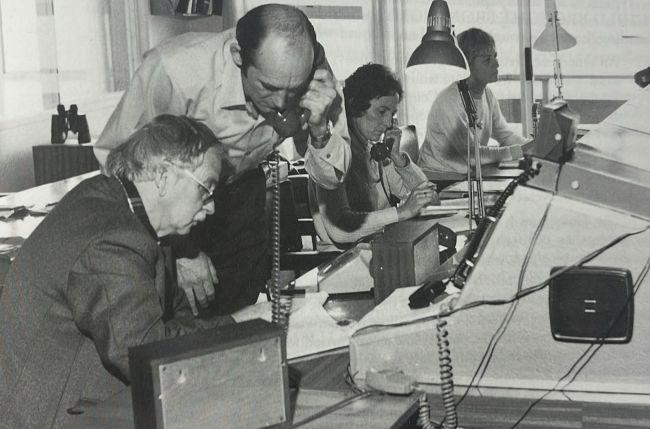
It was the 1980s. A volunteer crew from Auckland was preparing their vessel for patrol when a technician arrived dockside with something new - a VHF marine radio unit. It was bulky as a brick and hungry for power, bolted carefully into the cabin with instructions to keep it dry at all costs. Salt water and early electronics were an unhappy marriage, and the unit needed coaxing. But when it crackled to life, something shifted. For the first time, Coastguard crews could talk to the shore, and to each other, while out on the water.
It was, in hindsight, the beginning of everything.
A new language for the sea
VHF (Very High Frequency) radio operates on frequencies between 156 and 174 MHz, specifically allocated for maritime use. Unlike the HF (High Frequency) radio that preceded it, VHF offered cleaner, clearer communication over shorter distances, making it ideal for coastal and harbour operations.
“It changed the game,” says Marlborough Coastguard President Dave St John.
The physics, however, came with a catch: VHF signals travel in straight lines. They don't follow the curve of the Earth. When a vessel dropped behind a headland or moved into a channel between islands, it could vanish from radio contact entirely - there one moment, static the next.
For Coastguard volunteers already working with limited equipment and vast stretches of New Zealand's 15,000-kilometre coastline to cover, this was a serious constraint.
Filling the gaps
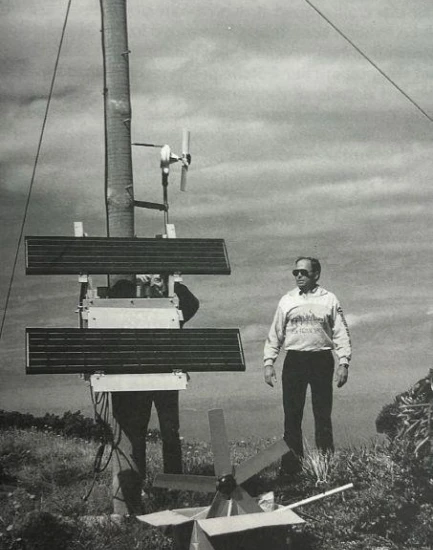
The answer came through infrastructure. Over the following decades, a network of VHF repeater stations was gradually established along New Zealand's coastline, positioned on high ground and elevated points to receive signals from vessels below the line of sight and rebroadcast them across wider areas. What had been patchwork coverage became, station by station, something approaching a national network. A crew working the Marlborough Sounds, or rounding a headland north of Auckland, or operating out of Nelson's sometimes tricky harbour approaches, could now maintain contact where silence had once reigned.
The technology of the units themselves evolved in parallel. Those early radios, robust enough in their day but limited in range, power-hungry, and sensitive to the moisture that is simply unavoidable at sea, gave way to progressively more capable equipment. Waterproofing improved. Battery efficiency improved. Handhelds arrived, meaning crew members could carry a radio with them rather than being tethered to the vessel's fixed unit.
“I remember the original units were pretty clunky and you had to know what you were doing to tune them,” recalls Thelma Wilson, a long-serving Coastguard Skipper from Kawau, “but today’s VHF with GPS is state-of-the-art.”
The operators on shore
Technology alone doesn't save lives. Behind every distress call received is a radio operator - and the story of those operators is as important as the story of the equipment.
In Coastguard's early years, a small group of volunteers staffed the radio watches, working from modest shore stations, listening for calls on Channel 16, the international maritime distress frequency. They coordinated responses as best they could with the tools available. It was skilled, demanding work that required calm under pressure and an intimate knowledge of local waters, vessel types, and the agencies that needed to be contacted when something went wrong.
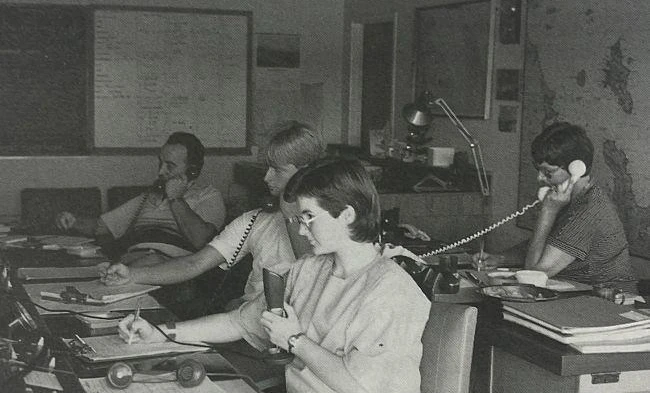
That once small team has now grown into a large, highly-trained group of radio operators who are on call around the clock, 365 days of the year. They are often the first human voice a person in distress hears. Their ability to gather fast, accurate information - the vessel's position, the number of people on board, and the nature of the emergency directly determines how quickly and effectively a rescue crew can respond.
“VHF radio is as important as engines,” says St John.
Still listening
Over 50 years of a nationally united Coastguard, and more than a century of saving lives at sea, Coastguard's relationship with radio communication has moved from that first salt-sprayed unit bolted into a boat cabin to a sophisticated, nationwide network that never sleeps.