Coastguard Tautiaki Moana is marking a proud milestone - 50 years as a nationally united maritime search and rescue service. Throughout the year, we’ll be sharing stories from the past five decades and reaching back to our earliest roots more than a century ago. These are the stories that honour the people and moments that have shaped who we are today and guide us to the future.
Coastguard has long been a lifeline on Aotearoa's waters. But our story didn’t begin with modern rescue vessels, national coordination, and a strong crew of more than 2,000 volunteers. It began with small, individual community groups dotted along the coastline – everyday people driven by nothing more than determination, courage, and a deep belief in helping people on the water.
It wasn't until 1976 that the New Zealand Coastguard Federation was formed. By uniting their knowledge and resources they sparked a new era of maritime rescue in New Zealand.
Where it began - Roots of courage
Small volunteer rescue groups started forming in communities as early as the late 1800s, born out of pure community spirit - neighbours helping neighbours.
They built the culture that still defines Coastguard today: practical, courageous, deeply local, and driven by service.
By the mid-20th century, these groups had become trusted fixtures in coastal communities, each shaped by its own waters, risks, and experience.
Rough waters, local challenges
These early crews often launched into rough seas, with unreliable communications, limited navigation tools and boats not designed for rescue work.
Many communities were isolated, so help could be hours away, or entirely dependent on whoever was willing to brave the conditions. If a rescue went wrong, there was no backup coming from the next harbour over. Volunteers were entirely on their own.
Most groups had limited funding – often relying on raffles, donations, and community good will.
Founding member Richard Udy from Waiuku, saw first-hand how the funding gap was felt by the individual groups.
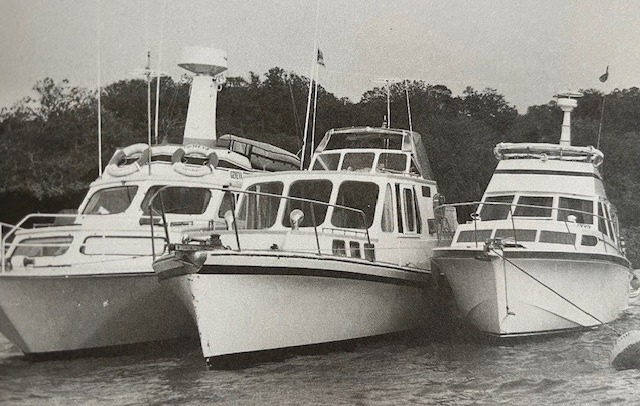
"Funding was a big one. Ninety nine per cent of groups used volunteers’ boats – they weren’t anything like what we’ve got now," he said.
Over the decades, recreational boating surged as more Kiwis discovered the joy of the water - and with it, the risks grew too. Water incidents became more frequent, and the limitations of informal community groups became increasingly clear.
Then came the Wahine Disaster of 1968. The tragedy shook the nation and highlighted the urgent need for a coordinated, well‑resourced national maritime rescue service.
One voice, one mission
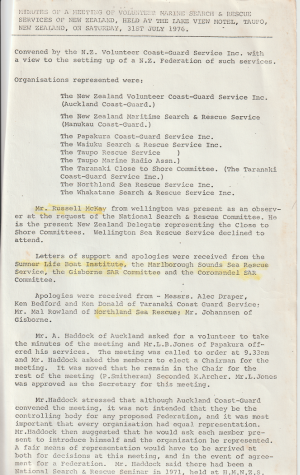
In 1976, nine volunteer rescue groups united to form the New Zealand Coastguard Federation, transforming individual local efforts into a coordinated national service.
Those groups included the Auckland Coast-Guard, Manukau Coast-Guard, Papakura Coast-Guard, Waiuku Search and Rescue Association, The Taupo Rescue Service, The Taupo Marine Radio Association, Taranaki Coast-Guard, The Northland Sea Rescue Service, The Whakatane Search and Rescue Service.
For the first time, rescue efforts could be coordinated across the country through shared training, common standards, and collective purpose. Their decision to collaborate marked the moment New Zealand’s volunteer rescuers became a true national network.
Udy, who oversaw onboarding units to the Federation, recalls the excitement around the coming together of the crews.
"Everyone was positive. Most of the units could see the benefits of uniting together and creating a stronger voice and stronger coordination," he said.
The 1976 merger didn’t happen by chance - it was driven by dedicated volunteers who spent years building relationships, sharing ideas, and pushing for a unified approach to saving lives. They shared a vision: a stronger, safer, nationally coordinated rescue service.
"We knew if we could join together and use one common voice we could make a difference," said Udy.
A 2000-strong Coastguard whānau
Over the five decades since those nine volunteer groups united, Coastguard has grown from individual community crews into a truly national organisation.
Today, more than 2,000 volunteers across 62 units make up our Coastguard whānau - rescuers, educators, mentors, and community champions who carry our mission far beyond the water.
They’ve responded to tens of thousands of incidents, brought countless people home safely, and stood beside families in their toughest moments.
"The standards of the skippers and crews are really high. Coastguard is a totally professional organisation now. I’m really proud of what was achieved," Udy said.
Every rescue, every tow, every search adds another thread to a legacy woven one callout at a time.
Through it all, the heart of Coastguard hasn’t changed:
Ordinary people doing extraordinary things.